
Is the virtual currency spreading under the name of Bitcoin permissible?
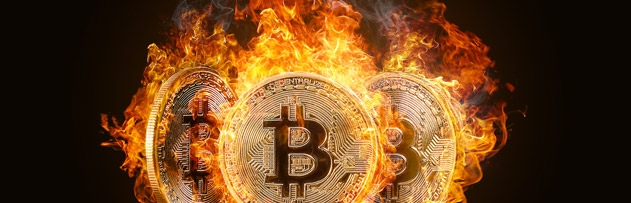
- There is a virtual currency spreading under the name of Bitcoin. Its virtual nature and susceptibility to all kinds of speculation have made me suspicious. What is your opinion on whether this is permissible, and what is your reasoning?
- Is it permissible to buy and hold the digital currency Bitcoin, which emerged in 2009 without any central management, similar to holding gold for investment purposes?
Dear Brother / Sister,
For a currency to be permissible, it needs to possess a feature that ensures trust among users and is generally accepted as a measure of value.
The crucial point here is whether the exchange instrument, known as money, carries significant uncertainties in its essence, production process, and reliability, whether it is used as a means of deception, and whether it leads to unjust and unwarranted enrichment of a certain segment of society.
In recent years, various types of digital cryptocurrencies have emerged; it is necessary to evaluate the decree of the use of each of them according to the general principles mentioned above.
Accordingly, the use of digital cryptocurrencies that inherently carry significant uncertainties, pose risks of deception and fraud, lack any guarantee, and lead to unjust and unwarranted enrichment of certain segments of society, such as practices known as pyramid schemes, is not permissible.
Presidency of Religious Affairs
Note: The Conclusion and Evaluation Report of the Cryptocurrencies Workshop in terms of Halal Finance held on March 7, 2020, is as follows:
1. The measure sought in money in terms of Islamic finance is stability in value and credibility. For this, there should be a guarantor behind the currencies. The guarantor can be the society itself, the state or another institution representing the society, or even the system on which the currency is based. The measure of what is used as money is not the substance of its raw material; what is essential in this regard is the custom of people, i.e., accepting something as money and its circulation. After meeting these criteria, there is no difference between a unit of money being a physical commodity, metal, paper, nominal, electronic, or crypto. Whether something has intrinsic/real value does not affect its status as money. Indeed, neither the Quran nor the Sunnah provides a definition or determination of what constitutes money.
2. It should not be forgotten that the vast majority of currencies in circulation, from paper money onwards, are nominal or digital in nature. As they do not contain real value like coins, they are more susceptible to manipulation, deception, and fluctuations beyond their value. Therefore, while researching the possibilities of maintaining the stability and credibility of money, society and relevant stakeholders should also be warned about the weak points of new currencies such as cryptocurrencies and the potential grievances they may cause.
3. Most of the studies on cryptocurrencies to date have been centered around the most common one, bitcoin, which operates on a completely different basis. However, there are also other cryptocurrencies produced based on blockchain technology, which work on completely different principles. It is important that cryptocurrencies be considered as a whole in these studies.
4. The existing evaluations and fatwas do not mention the blockchain technology underlying these currencies or specify that all cryptocurrencies and the technology they are based on are not permissible due to the mentioned negative aspects. In future studies, focusing on this technology will yield more realistic results.
5. In addition to its ethical and jurisprudential aspects, the subject of cryptocurrencies and the technology they are based on is a shared field of study for different disciplines such as economics, finance, information technology, and engineering. Therefore, evaluations and/or decisions should be made by committees formed through the joint work of experts from relevant disciplines.
6. The use of cryptocurrencies as “money” in their current status does not appear to be permissible in terms of Islamic finance principles due to the current and potential negative aspects but it is not due to the blockchain technology that the currencies in questions are based on. In this context, blockchain technology as well as other financial technologies should be utilized to the maximum extent in the field of Islamic finance.
7. Along with some negative aspects of cryptocurrencies, they also entail drawbacks such as facilitating money laundering, providing finances to illegal activities, high risks associated with uncertainty, anonymity of currency holders, and lack of legal foundation.
8. The production costs of digital currencies are high. The setup of processors and computers necessary for the activity known metaphorically as mining is expensive, and they consume a considerable amount of electricity. Moreover, production becomes increasingly difficult over time, requiring a significant amount of time. This aspect should also be taken into account in evaluations related to cryptocurrencies.
9. Cryptocurrencies are stored in encrypted electronic wallets. Therefore, if the password is forgotten or obtained by others, accessing these funds becomes impossible. Likewise, there is currently no regulation regarding the transfer of these funds to heirs in case the holder passes away. This could be seen as contradictory to the purpose of protecting property in terms of fiqh.
10. Considering the evaluations on the issue, it can be concluded that cryptocurrencies are originally permissible; however, due to the fact that some Islamic legal scholars consider them to lead to potentially harmful consequences mentioned above, they are included in the category of definite or potentially problematic issues subject to legal restriction. When these negative aspects are eliminated or minimized, there will be no obstacle to their permissibility.
11. Finally, in addition to various areas of financial technology, there is a need for more comprehensive scientific meetings on this issue, with a particular focus on aspects such as the technology, nature (goods, value, money) of cryptocurrencies, and the extent of speculative problems arising from their use.
Questions on Islam
- Is it permissible to design and sell NFTs?
- Is it permissible to deposit money into a gold account or a gold fund?
- Drawing on Computer
- There are so many banks that claim to be "Islamic", that is "Interest Free" banking. Could you explain please which banks are preferable?
- BELIEF
- Will you give an example from our life related to Allah’s command "Be"
- How does materialism explain existence? What is nanotechnology?
- Is it permitted to practice as a mortgage associate?
- CONTINUITY OF INTRASPECIES CHANGE AND IMPOSSIBILITY OF TRANSITION BETWEEN SPECIES
- Is it permissible to buy and sell foreign currency?


