Most Read in the Category of What you wonder about the Quran
1-)
The view of the Quran and philosophy on life
Why does the Quran not mention the universe in the same way as philosophy does?
Let us understand the answer to this question through a parable. Once, a religious and very artistic king wanted to write something that was suitable for the holiness of the Quran and the miraculousness of its words and to clothe its miraculous body with a nice garment.
That artistic person wrote the Quran in a wondrous way. He used all precious gems while writing it. In order to attract attention to its various realities, he wrote some letters with diamonds and emeralds, some with pearls and onyx, some with brilliant and coral and some with gold and silver.
He decorated it in such a style that both those who could read and those who could not read were amazed by it. It seemed to be a very precious antique piece of work to experts since the outward beauty of the book was an indication of the bright beauty of its meaning.
Then, he showed that wise, artistic and decorated book to a philosopher and a Muslim scholar. He ordered each of them to write a book about the wisdom of the book in order to test and to reward them.
First, the philosopher then the scholar wrote a book about it. The book of the philosopher mentioned only the adornment of the letters, the connection between words, their positions and the properties of its gems. It did not mention its meaning. For, the foreign philosopher did not know how to read Arabic. He did not regard the ornamented Quran as a book and as a writing that had a meaning. He saw it as an ornamented antique work. The philosopher did not know Arabic but he was a good engineer, a fine artist, a skilled chemist and an expert jeweler. He wrote the book based on the arts and sciences he knew.
When the Muslim scholar looked at it, he saw that it was the glorious and wise Quran. He did not pay attention to the external adornments; he was not interested in the ornamented letters. Rather, he became preoccupied with something that was a million times higher, more elevated, more subtle, more noble and more beneficial. For, mentioning the sacred truths and lights of the mysteries beneath the veil of the decorations, he wrote a truly fine commentary.
Then the two of them took their works and presented them to the illustrious king. The king first took the philosopher's work. He looked at it and saw that that self-centered and nature-worshipping man had worked very hard, but he had written nothing of true wisdom. He had understood nothing of its meaning. Indeed, he had confused it and been disrespectful towards it, and ill-mannered even. For, supposing that the source of truths, the Quran, to be meaningless decoration, he had insulted it as being without value in regard to its meaning. And so the wise king hit him over the head with his work and expelled him from his presence.
Then he looked at the work of the other, the truth-loving, scrupulous scholar, and saw that it was an extremely fine and beneficial commentary, a most wise composition full of guidance. He said, "Congratulations! May God bless you! This is wisdom and they call those who possess it knowledgeable and wise. As for the other man, he was a craftsman who had exceeded his authority.
Then, in reward for the scholar's work, he commanded that in return for each letter ten gold pieces should be given him from his inexhaustible treasury.
And so, if you have understood the parable, look at its reality and see this:
The ornamented Quran in the parable is this artistically fashioned universe, whose ground is ornamented with flowers, and whose sky is decorated with stars.
And the king is Allah, who is ruler of the pre-eternity and post-eternity.
As for the two men, the first one, that is the foreigner, is philosophy and philosophers, and the other is the Quran and its students.
Yes, the Quran is the most eloquent translator of the book of the Universe. Yes, it instructs man and the jinn concerning the signs of creation inscribed by the pen of power on the pages of the universe and on the leaves of time. And it looks at beings, each of which is a meaningful letter, as bearing the meaning of another, that is, it looks at them on account of Allah, who creates them.
For instance, you can look at a mirror in two ways:
1- To look at the mirror to see the mirror itself; this looking is called literal meaning.
2- To look at the mirror to see the thing or person that appears on it. This second look is called signified meaning. In this look, the mirror is of no importance. What matters is what is seen on the mirror.
Philosophy looks at the universe, which is like a mirror, with literal meaning, that is, on account of beings.
The Quran looks at the mirror of the universe to see the artist that becomes manifest on that mirror. It has discovered His names and attributes and said, "How beautifully they have been created; they show the beauty of Allah, their Maker, in the best way."
On the other hand, philosophy has plunged into the decorations of the letters of the universe and beings and has become bewildered. Instead of looking at the universe on account of Allah, it has looked at the universe on account of beings; instead of saying, "How beautifully they have been made", it has said, "How beautiful they are" and has exceeded its boundaries.
We can understand the difference of these two views through the following parable:
If we put an antique chair, before philosophers, they would start to examine it. They would search its shape, structure, the type of the tree, when it was made, etc. They would never think about who made this chair and why it was made. They would act as if that chair came into being as a coincidence.
However, the Quran and its students would be interested in the maker of the chair rather than the ornament of the chair and the quality of the tree. They would focus on questions like, “Who made this chair? Why did he make it? What is the meaning of this chair? What is the name of the maker of this chair and what are his attributes? Does he have any commands for us?”
When a philosopher and his students saw a horse tied to a stake pushed into the ground, they would be interested in the stake, the horse and the rope. They would write many books about them. However, they would not be interested in the issues of wisdom like, “Who does the horse belong to? Who pushed this stake into the ground? Why did he tie the horse here? Where did the rope come from? What does the person who did it want to say?" However, the Quran is interested in real wisdom and teaches people the answers to the questions above.
The world and the things in it are works of art that have been made artistically. The world and the other stars are connected to the sun with spiritual ropes and rotate around it. Philosophy is interested only in the outward appearance of this world and the things in it. It mentions the laws that connect them to each other.
It does not think about why and by whom these wonderful things were created and who imposed these laws. However, the Quran sees everything as a window leading to the artist of everything, Allah. It tries to make people know Allah through those things and looks at the beings on account of Allah. It discovers Allah's names and attributes in everything, from a fly to the sun. Everything looks like a letter and a poem, including the names of their artists. Everything looks like a treasure in which divine attributes are kept.
Thus, philosophy looks at the universe with literal meaning, that is, on account of beings. The Quran looks at it with signified meaning, that is, on account of its maker, Allah. The expressions of the Quran and philosophy, which look at the universe with different reasons and through different windows, about the universe will definitely be different.
The Quran removes the veil of heedlessness and the veil of ordinariness and habituation placed by philosophy on the simple things that are regarded as worthless in the universe but that are actually extraordinary and miracles of Allah's power; it shows those extraordinary beings to sane people attracting their look on them and showing them an endless treasure of knowledge and science.
For instance, the Quran says the following:
“Do they not look at the Camels, how they are made?― And at the Sky, how it is raised high?
And at the Mountains How they are fixed firm?―
And at the Earth, how it is spread out? It is He who sendeth down rain from the skies.
With it We produce vegetation of all kinds: from some We produce green (crops), out of which We produce grain, heaped up (at harvest).
Out of the date-palm and its sheaths (or spathes) (come) clusters of dates hanging low and near: and (then there are) gardens of grapes, and olives, and pomegranates each similar (in kind) yet different (in variety).
When they begin to bear fruit, feast your eyes with the fruit and the ripeness thereof. Behold! In these things there are signs for people who believe”
Thus, with the verses above and similar ones, the Quran attracts attention to the things that are regarded as ordinary and worthless. It emphasizes that they are extraordinary works of art. It orders us to look at them, to think about their subtleties and to know Allah, who is their artist.
As for philosophy, it hides the miracles and works of Allah's power under the veil of custom and habituation, and mentions them inattentively. It pays attention to rare individuals that are exceptions.
For instance, it regards the creation of man, which is a miracle of divine power, as normal and ordinary and looks at it indifferently. However, it displays a man with three legs or two heads.
Philosophy regards the nutrition of young animals and humans regularly by Allah's treasure of mercy as normal and ordinary, and hides it under the veil of ingratitude. However, it sees the exceptional nutrition of an insect living alone under the sea by a green leaf and wants to make all fishermen cry through the grace and generosity that become manifest on it.
This is the wealth and richness of the Quran in terms of knowledge, wisdom and making Allah known; and this is the poverty and bankruptcy of philosophy in terms of knowledge, taking lessons and making Allah known.
2-)
Abrogation (Naskh) in the Quran and the wisdom behind abrogation
Abrogation (Naskh) in the Quran
This issue is very important. For, the enemies of the Quran try to deceive the Muslims who are not aware of naskh (abrogation) and want to steal their belief.
For instance, they say,
“In verse 240 of the chapter of al-Baqara of the Quran which you believe in, the women whose husbands died are ordered to wait for one year before marrying again but they are ordered to wait for 4 months and 10 days in verse 234 of the same chapter. Which one is true? It is impossible to apply both orders at the same time; then, these verses are contradictory.”
They present some nonsense like the one above as if they are true and try to deceive the poor Muslims who are not aware of the Quranic sciences and who have never heard the word abrogation, let alone knowing what it is.
Both the person who tries to deceive Muslims and the Muslim who does not know about the issue are responsible. For, he is obliged to know his book and the issues in it. Maybe his heart has to struggle with these kinds of doubts since he has not fulfilled his responsibility and has not been interested in his holy book.
If he knew that the period of iddah for the women whose husbands died was one year in the first years of Islam, that this decree was replaced by the decree that determined it as 4 months and 10 days and that the decree which is valid today is 4 months and 10 days, his heart would not be harmed by doubts.
We will deal with the issue in detail and by giving examples. Thus, we will prevent one of the tricks of missionaries and munafiqs:
Naskh lexically means to replace something by something else. In religious terminology, it means the replacement of a religious decree and order related to worshipping or a transaction by another decree and order afterwards. This deed is called naskh (abrogation), the new decree is called nasikh (abrogator) and the verse whose validity has been annulled is called mansukh (abrogated), which is no longer valid.
Naskh is not in question in basic beliefs, news and stories. It is in question in orders and prohibitions. For, if the decree of a verse in which some news, a story and basic beliefs are mentioned had been abrogated, the claim that there are contradictions in verses would be meaningful and it would mean to tell lies; it is impossible for Allah to tell lies.
Imam Qurtubi states the following regarding the issue:
“All scholars must know naskh with its evidences. Only brainless and ignorant people reject naskh. To deduce a decree from the verses of decree in the Quran and to know halals and harams can only be possible by knowing naskh. Those who do not know it are deprived of the knowledge that naskh exists in the Quran as all Islamic scholars agree on it.”
It is stated in verse 106 of the chapter of al-Baqara that naskh exists in the Quran as follows:
“None of Our revelations do We abrogate or cause to be forgotten, but We substitute something better or similar...”
The following is stated in verse 101 of the chapter of an-Nahl:
“When We substitute one revelation for another and Allah knows best what He reveals (in stages) they say "Thou art but a forger": but most of them understand not.”
Wisdoms Behind Naskh (Abrogation)
What are the wisdoms behind naskh (abrogation)?
There are many wisdoms behind abrogation. When we learn them, we will learn that the existence of abrogation in the Quran is not a defect; maybe, non-existence of abrogation would be a defect.
We are going to overcome the tricks of those who try to show abrogation as a defect in the Quran.
Let us analyze the wisdoms behind abrogation it items:
Wisdoms behind Naskh (Abrogation)
1-) It is known that Islamic decrees aim to meet the needs of humanity. These needs can change as place and time change. For instance, when a decree is necessary, Allah orders a decree to meet that need. Then, when that need is no longer valid, He annuls that decree and sends a better decree for His slaves. It is easier and more appropriate for His slaves.
It is like an expert doctor changing the drugs he gives to his patient based on the course of the illness. Yes, all prophets were sent as doctors of heart and educators of people. The shari'ah of every prophet was sent down by Allah gradually is based on the needs of the people. Sometimes a drug given to a patient for treatment at a certain time can be harmful for him at some other time; similarly, a decree that is useful for people for a certain time can be harmful to them later. It is a necessity of Allah's wisdom and mercy to remove such a decree.
2-) Allah educated the Arab nation gradually in 23 years, which is quite a short period of time.
This education would not be possible even in a few centuries for some other nations that did not accept the Quran as their guide. One of the secrets of the success of this education is as follows: Allah sent them decrees based on their abilities and strength. Allah annulled the previous decree and introduced a new one.
If Allah had given them hard orders before their belief became perfect, they would not have been able to fulfill them and they would probably have been deprived of belief.
Let us think about this: If alcohol had been prohibited abruptly in a community where people drank all the time, how many people would have obeyed this prohibition?
Would those who did not obey this prohibition not have exited Islam?
Therefore, alcohol was prohibited in four stages. That is, alcohol was prohibited when people reached the level of perfection in which they poured the alcoholic drinks into the streets when it was prohibited; streets looked like streams of alcoholic drinks when drinking alcohol was prohibited.
This is the way chosen by Allah for the education of nations and individuals. Then, why can people not understand the replacement of a decree by another one by Allah while man changes and becomes perfect and the universe changes?
Thus, naskh does not take place because Allah, who sent the Quran, does not know that the last decree He sent was perfect. Allah made Muslims perfect through stages. If the hard orders had been sent down at once, Muslims would not have been able to obey them.
The fact that daily prayers were ordered to be performed one and a half years before the Migration is an evidence for it. Can people say, "Why did Allah not order prayers at once and why did He wait so much?" Definitely not! For, it is a necessity of the wisdom of Allah, who has pre-eternal knowledge, to order it later.
3-) Let us think of a tobacco addict. He has become like nicotine storage. You say to him,
“Give up smoking, which is harmful to your body because smoking means gradual suicide. It is like stabbing yourself slowly not suddenly.” Even if you made a doctor tell him, this, it would be difficult for him to give up smoking at once.
Even a doctor himself cannot give smoking, which is a small habit, though he knows how harmful it is. Think of an alcoholic person. To tell him, "give up drinking" would be like telling him, "change your nature".
It is not possible to remove bad habits that have penetrated into people's blood all of a sudden.
They can be removed through gradual education, which is what the Quran did through abrogation. To do the contrary, would be like sending a person who is under atmospheric pressure up to a height of twenty thousand feet all of a sudden, which would cause him to die.
Why do the words of the verses that were abrogated still exist in the Quran?
Thank God, I have believed that abrogation is right and it is a necessity of divine wisdom for abrogation to exist in the Quran. However, I still have a question in my mind. If you answer it, I will definitely believe that the Quran is Allah's pre-eternal word. My question is this:
Why are the abrogated verses still kept in the Quran though the decrees of the verses were annulled? Would it not have been better if those verses were removed when their decrees were annulled?
We can answer this question in two ways:
1-) The Quran can be read both to learn and apply the decrees it includes and with the intention of worshipping to gain rewards. Though their decrees were annulled, the verses themselves were kept in the Quran because they are read with the intention of worshipping to gain rewards.
2-) The verses of abrogation were sometimes sent to mitigate a heavy decree that was present in a previous verse like decreasing the period of iddah for a woman whose husband died to 4 months and 10 days.
The reason why this verse was not removed is to remind people the heaviness of the previous decree and the bounty of mitigation by Allah for His slaves.
3-)
Why does Allah say "We" not "I" in the Quran?
It is really very strange to ask such a question and to think about why Allah says "We" not "I" though the Quran teaches oneness of Allah throughout.
It is really something that cannot be understood and explained for a Muslim to have doubts about the Quran by some questions whose answers are very easy though he needs to strengthen his belief in the Quran and his creed with each evidence.
This simple question may have harmed the minds and hearts of many people and caused them to have suspicions about the Quran. We prepared this work to help and cure those whose minds and hearts have been harmed by doubts and delusions.
Now, let us answer the question why Allah says "We" not "I". Let us find out about the answer in items:
1- The word "we" is a word used by kings and sultans. When they start speaking or writing letters, they start as "We, who…"
For, this expression includes majesty and greatness. Allah is the sultan of pre-eternity and post-eternity. To prefer the word "we", which expresses majesty and greatness, to the word "I" is definitely a necessity of majesty.
2- Allah uses the word "We" when He mentions things in which angels are engaged and are used as a means like the sending down of the Quran; thus, the angels who are used as a means are indicated when the word we is.
For instance, when Allah says,"We have, without doubt, sent down the Message", the verse is understood as follows: "I sent down the Quran to my beloved Prophet through my angels. When Allah says, “We send down pure water from the sky”, attention is attracted to the angel in charge of bringing rain drops down; the angel is also included in this expression.
However, these angels have no effect on these deeds. For, the real doer of deeds is Allah.
3- In the verses in which creation is narrated, Allah usually uses the word I. For instance, “I have only created jinn and men, that they may serve Me.” (adh-Dhariyat: 56)
However, in some verses in which creation is narrated, the word "We" is used. What is meant by "We" is the fact that the angels witnessed the deed of creation and that they were there. With this expression, Allah makes angels witness His words.
For instance, when Allah says, “We created not the heavens and the earth and all between them” (al-Ahqaf: 3), it is understood that He created them alone but the angels were there and that they witnessed this creation.
4- With this expression, Allah teaches us something and tells us, "Say we instead of I; do not display egoism; do not boast; keep away from conceitedness; rise with modesty; be the perfect man by getting rid of your ego.”
4-)
Do the repetitions in the Quran not bore and tire people and what is the wisdom behind the repetitions in the Quranic verses?
Do the repetitions in the Quran not bore and tire people?
What is the wisdom behind the repetitions in the Quranic verses?
Do the repetitions in the Quran not bore and tire people and what is the wisdom behind the repetitions in the Quranic verses?
Everything that shines is not fire. Yes, repetitions are sometimes tedious, but not always. It is not valid for everywhere, every word and every book. Many repetitions that are thought to be boring are appreciated and admired by rhetoric.
Yes, the food man eats includes both basic sustenance and fruit.
The more the former, that is, sustenance, is repeated, the greater the pleasure it gives; it brings about more and more thanks.
The latter, that is, fruit, gives rise to boredom when repeated and provides pleasure when replaced with something new
Similarly, words and speech are divided into two.
Some are realities that give spiritssustenance and strength to the mind. The more they are repeated, the more life they give to spirits and the mind like sunlight. Repetition is not desired and liked in the part that is like fruit. The Quran is nutrition and strength for the heart; therefore, its repetition gives pleasure not boredom. There are some parts of the Quran that are the spirit of that strength; the more they are repeated, the more brilliantly they shine, scattering lights of truth and reality; they smell nice like musk as they are dealt with.
Besides, there are no repetitions actually in the verses that are thought to be repetitive. For, those verses are thought to be repetitive since they look similar in terms of their phrases and words but they express different wisdoms, points and purposes.
The story of Moses has so many virtues and wisdoms; it is rhetoric that it is repeated for one of the aspects it comprises in a place that is suitable for that place. That is, in any chapter that has repetitions, an aspect suitable for the spirit of that chapter is meant.
In addition, the Quran is a book of dhikr, invocation and invitation. Therefore, the repetitions in it are nice. For, the necessity of dhikr is illumination through repetition; the necessity of invocation is asking insistently and the necessity of invitation is strengthening and confirming through repetition. Then, repetition, which is thought to be a defect, cannot be a defect.
Contrarily, lack of repetition is a defect in such a book because dhikr, supplication and invitation are nice when they are repeated.
Moreover, everyone is not capable of reading the whole Quran al the time, but mostly is able to read one chapter. Therefore, since the most important purposes of the Quran like oneness, the hereafter and worshipping are included in each chapter, each chapter is like a small Quran. That is to say, these purposes are repeated in almost all chapters so that no one should be deprived of them.
Also, the Quran is a founder. It contains the foundations and principles of Islam. It tries to place these principles into the social life of humans. Then, repetition is necessary to strengthen and settle those realities in hearts. Then, repetition, which is thought to be a defect, is not a defect. Contrarily, if something is repeated somewhere, it is repeated for confirmation due to its importance.
Also, the Quran speaks of such mighty matters and minute truths that numerous repetitions are necessary in different forms in order to establish them in the hearts of those who read and listen to it.
Due to the reasons we have mentioned above, it is understood how suitable the repetitions in the Quran that are thought to be a defect are and how appropriate they are in terms of rhetoric.
We want to conclude the topic by expressing the wisdoms of repetitions in verses though items:
1- In the Quran, different wisdoms, points and purposes are expressed in different places; the verses look similar in terms of their phrases and words; so, they are thought to be repetitive.
2- The Quran is a book of dhikr, invocation and invitation. Dhikr, invocation and invitation are nice if they are repeated.
3- Moreover, everyone is not capable of reading the whole Quran all the time, but mostly is able to read one chapter. Therefore, since the most important purposes are included in each chapter, each chapter is like a small Quran. That is to say, these purposes are repeated in almost all chapters so that no one should be deprived of them.
4- Also, the Quran is a founder. It contains the foundations and principles of Islam. It tries to place these principles in the social life of humans. Then, repetition is necessary to strengthen and settle those realities in hearts.
5- Repetitions are necessary in different forms in order to establish mighty matters and minute truths mentioned by the Quran in the hearts of those who read and listen to it. Due to those reasons, the repetitions in the verses of the Quran are appropriate, necessary and nice.
5-)
The debate between Badiuzzaman Said Nursi and the Devil
We will quote a conversation between Badiuzzaman Said Nursi, who said, "I will prove that the Quran is a luminous light that does not go out and that cannot be extinguished" by devoting his wife to this cause, and the Devil.
I was listening to the Qur’an being recited in Beyazit Mosque in Istanbul. Suddenly, although I could not see anyone, I seemed to hear an unearthly voice which captured all my attention. I listened with my imagination, and realized that it was saying to me:
‘You consider the Qur’an to be extremely elevated and brilliant. Be unbiased for a minute and consider it again. That is, suppose it to be man’s word. I wonder whether you would still see the same qualities and beauty in it?’ In truth, I was deceived by the voice; I thought of the Qur’an as being written by man. And just as Beyazit Mosque is plunged into darkness when the electric switch is turned off, I observed that with that thought the brilliant lights of the Qur’an began to be extinguished. At that point I understood that it was the Devil who was speaking to me. He was drawing me towards the abyss. I sought help from the Qur’an and a light was at once imparted to my heart giving me firm strength for the defence. I began to argue back at the Devil, saying:
‘O Satan! Unbiased thinking is to take a position between two sides. Whereas what both you and your disciples from among men call unbiased thinking is to take the part of the opposing side; it is not impartiality, it is temporary unbelief. Because, to consider the Qur’an to be man’s word and to judge it as such is to take the part of the opposing side; it is to favour something baseless and invalid. It is not being unbiased, it is being biased towards falsehood.’ The Devil replied:
‘Well, in that case, say it is neither Allah’s Word nor man’s word. Think of it as between the two.’ To which I rejoined:
‘That is not possible either. For if there is a disputed property for which there are two claimants, and the claimants are close both to one another and to the property, the property will then either be given to someone other than them, or will be put somewhere accessible so that whoever proves ownership can take it. If the two claimants are far apart with one in the East and one in the West, then according to the rule, it will remain with the one who has possession of it, as it is not possible for it to be left somewhere between them.
‘Thus, the Qur’an is a valuable property, and however distant man’s word is from Allah’s, the two sides in question are that far apart; indeed, they are infinitely far from one another. It is not possible for the Qur’an to be left between the two sides, which are as far apart as the Pleiades and the ground.
For they are opposites like existence and non-existence or the two magnetic poles; there can be no point between them.
In which case, for the Qur’an, the one who possesses it is Allah’s side. It will be accepted as being in His possession, and the proofs of ownership will be regarded in that way. Should the opposing side refute all the arguments proving it to be Allah’s Word, it may claim ownership of it, otherwise it may not. God forbid! What hand can pull out the nails fastening that vast jewel to the Sublime Throne of Allah, riveted as it is with thousands of certain proofs, and break its supporting pillars, causing it to fall?’
‘And so, inspite of you, O Satan!, the just and the fair-minded reason in this equitable and rightful manner. They increase their belief in the Qur’an through even the slightest evidences.
While according to the way shown by you and your disciples, if just once it is supposed to be man’s word and that mighty jewel fastened to the Divine Throne is cast to the ground, a proof with the strength of all the nails and the firmness of many proofs becomes necessary in order to raise it from the ground and fasten it once more to the Throne, and so be saved from the darkness of unbelief and reach the lights of belief. But because it is extremely difficult to do this, due to your wiles, many people are losing their faith at this time by imagining themselves to be making unbiased judgements.’
The Devil turned and said:
‘The Qur’an resembles man’s word. It is similar to the way men converse. That means it is man’s word. If it was Allah’s Word, it would be appropriate to Him and would be altogether out of the ordinary. Just as His art does not resemble man’s art, so also should His Word not resemble man’s word.’
I replied:
‘It may be understood as follows: apart from his miracles and special attributes, the Prophet Muhammad (PBUH) was a human being in all his actions, conduct, and behaviour. He submitted to and complied with the Divine laws and commands manifested in creation. He too suffered from the cold, experienced pain, and so on. His deeds and attributes were not all made out of the ordinary so that he could be the leader of his community through his actions, its guide through his conduct, and instruct it through all his behaviour. If he had been out of the ordinary in all his conduct, he could not himself have been the leader in every respect, the total guide of everyone, the ‘Mercy to All the Worlds’ through all his attributes.
‘In just the same way, the All-Wise Qur’an is the leader to the aware and the conscious, the guide of jinn and men, the teacher of those attaining to perfection, and instructor of those seeking reality. It is of necessity and of a certainty, therefore, in the same form as man’s conversation and style. For men and jinn take their supplications from it and learn their prayers from it; they express their concerns in its language, and learn from it the rules of social behaviour, and so on. Everyone has recourse to it. If, therefore, it had been in the form of the Divine speech which the Prophet Moses (Peace be upon him) heard on Mount Sinai, man could not have borne listening to it and hearing it, nor made it the point of reference and recourse.
Moses (Peace be upon him), one of the five greatest prophets, could only endure to hear a few words.
Next, the Devil said:
‘Many people speak of matters similar to those in the Qur’an in the name of religion. Is it not possible, therefore, that a human being did such a thing and made up the Qur’an in the name of religion?’
Through the light of the Qur’an I replied as follows:
‘Firstly: Out of love of religion, someone who is religious may say, ‘The truth is thus, the reality of the matter is this. Almighty Allah commands that.’ But he would not make Allah speak to suit himself. Trembling at the verse, Who, then does more wrong than one who utters a lie concerning Allah?, (Qur’an, 39:32.) he would not overstep his mark to an infinite degree, imitate Allah, and speak on His behalf.
‘Secondly: It is in no way possible for a human being to be successful in doing such a thing on his own, in fact, it is completely impossible. Individuals who resemble one another may imitate one another, those of the same kind may take on one another’s forms, those who are close to one another in rank or status may imitate one another and temporarily deceive people, but they cannot do so for ever. For in any event, the falseness and artificiality in their behaviour will show up their imposture to the observant, and their deception will not last.
If the one who is attempting to imitate another under false pretences is quite unlike them, for example, if an uneducated man wants to imitate in learning a genius like Ibn-i Sina, or a shepherd assume the position of a king, of course, they will not deceive anyone at all, they will only make fools of themselves. Everything they do will proclaim, ‘This is an impostor.’
‘Thus, to suppose – God forbid!, a hundred thousand times – the Qur’an to be man’s word is utterly impossible, no rational being can accept it as possible, to do so is a delirium like imagining to be possible something that is self-evidently impossible like a fire-fly being seen by astronomers as a real star for a thousand years; or a fly appearing to observers in the true form of a peacock for a year; or a bogus common private posing as a famous lofty field marshal, taking over his position and remaining in it for a long period without giving away his deception; or like a slandering, unbelieving liar affecting the manner and position of the most truthful, trustworthy, upright believer throughout his life and being completely unruffled before even the most observant while concealing his fraud from them.
‘In just the same way, if the Qur’an is supposed to be man’s word, then it has to be supposed, God forbid, that that Perspicuous Book, which is considered to be clearly a most brilliant star, rather, a sun of perfections perpetually scattering the lights of truth in the heavens of the world of Islam, is like a fire-fly, a spurious sham made up by a counterfeiting human. And those who are closest to it and study it most carefully do not realize this, and consider it to be a perpetual, exalted star and source of truth. Together with this being impossible a hundred times over, even if you went a hundred times further in your diabolical machinations, O Satan, you could not make such an assertion, you could not deceive anyone of sound reason! Only sometimes you trick people by making them look from a great distance, thus making the star appear as small as a fire-fly.
The Devil retorted:
‘How should I not deceive them? I have deceived most of mankind and their foremost thinkers into denying the Qur’an and Muhammad.’
I replied:
‘Firstly: When seen from a great distance, the greatest thing appears the same as the smallest.
It can be said that, "a star is like a candle". You deceive people by making them look at the Quran from a distance. You make that big star seem like a candle.
‘Secondly: Also, when seen both as secondary and superficially, something which is completely impossible may appear to be possible.
‘One time an old man was watching the sky in order to spot the new moon of Ramadan when a white hair fell on his eye. Imagining it to be the moon, he announced: ‘I have seen the new moon.’ Now, it is impossible that the white hair should have been the moon, but because his intention was to look for just the moon and the hair was by the way and secondary, he paid it no attention and thought that impossibility was possible.
Similarly, you make people look at the Quran randomly. You make them look at it superficially. You cover the eye with a single hair and prevent the eye from seeing the mountain.
‘Thirdly: Also, non-acceptance is one thing and denial is something quite different. Non-acceptance is indifference, a closing of the eyes to something, an ignorant absence of judgement. Many completely impossible things may be concealed within it, and the mind does not concern itself with them.
As for denial, it is not non-acceptance, but an acceptance of non-existence; it is a judgement. The mind is compelled to work. So a devil like you takes hold of the mind of a person, then leads it to denial.
O Satan! Showing the false as truth and the impossible as possible through satanic wiles like heedlessness, misguidance, fallacious reasoning, obstinacy, false arguments, pride, deception, and habit, you make those unfortunate creatures in human form swallow unbelief and denial, although they comprise innumerable impossibilities.
The Quran is such a book that it has the following properties:
-It has given the ummah of Muhammad an order that will conquer this world and the hereafter with its strong laws, sound principles and the commands that penetrate spirits.
-It has trained the minds and educated the hearts of those that have been subject to it and dominated their spirits.
-In addition, it has cleared the consciences and made all organs and feelings do true tasks.
-It has guided the scholars, truthful people, saints and real men that have shined like bright stars in the sky of the realm of humanity.
-It has always taught humanity the truth, honesty, trust and security.
-It has given man happiness both in this world and the hereafter with the truths of belief and principles of Islam.
-It has made itself accepted in the world with many more deeds that we are unable to count.
It is nonsense of unbelief that will embarrass even devils to regard a book with so lofty virtues as - God forbid - worthless and fake.
The person who brought us this book is such a figure that he has the following properties:
-He taught man the laws of Allah with his solemn deeds throughout his life.
-He taught man the laws of Allah with his solemn deeds throughout his life.
-He showed man the true path and the way of endless bliss.
-As his enemies accepted, nobody saw anything deceitful about him and his enemies themselves accepted that he was a trustworthy person.
-Every stage of his life witnessed that he feared torture of Allah very much and that he knew Allah and made Him known, loved Allah and made Him loved more than anybody else.
-He led and has been leading one fifth of the humanity and half of the earth for 1400 years majestically.
To say that the Quran is the word of a human being means to regard Hz. Muhammad (pbuh), whom the realm of humanity saw only once and will never see again, and who is the pride of the universe, as a fraud and creedless person - God forbid - who does not fear Allah and does not know Allah, and as a person in the lowest level of humanity, which is the darkest and ugliest form of unbelief and heresy.
O Satan and disciples of Satan!
The Quran is either the Word of Allah come from the Supreme Throne of Allah and His Greatest Name, or, God forbid, and again, God forbid, it is a human forgery fabricated on earth by someone without belief who neither feared Allah nor knew Him.
In the face of the above proofs, O Satan, you can neither say that, nor could you have said it, nor will you be able to say it in the future. Therefore, the Qur'an is the Word of the Creator of the universe. Because there is no point between the two; it is impossible and precluded that there should be. Just as we have proved in the most clear and decisive manner; and you have seen it and heard it.
In the same way, Muhammad (pbuh) is either Allah's Messenger and the highest of the prophets and the most superior of creatures, or, God forbid, he has to be imagined to be someone without belief having fallen to the lowest of the low because he lied concerning Allah, and did not know Allah, and did not believe in His punishment.
And as for this, O Devil, neither you nor the philosophers of Europe and hypocrites of Asia on whom you rely could say it, nor could you say it in the past, neither shall you be able to say it in the future, for there is no one in the world who would listen to it and accept it. It is because of this that the most corrupting of those philosophers and the most lacking in conscience of the hypocrites, even, admit that
"Muhammad (pbuh) was very clever, and was most moral and upright..."
Since this matter is restricted to these two sides, and the second one is impossible and no one at all claims it to be true, and since we have proved with decisive arguments that there is no point between them, for sure and of necessity, in spite of you and your party, Hz. Muhammad (pbuh) is the Prophet of Allah, and the highest of the prophets and the best of all creatures.
And now if you have anything to say, O Satan, say it.
Satan replied:
I cannot oppose what you say, nor defend myself. But there are many foolish people who listen to me; and many devils in human form who assist me; and many pharaohs among philosophers who learn things from me which flatter their egos.
They prevent the publication of works like yours. Therefore, I shall not lay down my arms before you.
6-)
What is the reason behind the severe complaints, intimidation and big threat by the Quran against man, who is weak?
What is the wisdom behind the severe complaints and intimidation by the Quran against man, who is weak?
The reason behind the big threat by the Quran against man, who is weak
Man is weak enough to be defeated by a microbe that is invisible to the eye; and he is poor; the capital he has is partial freedom and partial freewill. However, his needs and desires are endless. In order to understand the wisdom behind the severe complaints big threats and intimidationby the Quran against man, who is so weak and poor, consider the following two comparisons:
First Comparison:
For example, there was a royal garden in which were innumerable fruits and flowers. Many servants were appointed to attend to it. They all had different duties. The duty of one of the servants was only to open the water canal so that the water could spread throughout the garden and the plants, trees and other inhabitants of the garden would benefit from it. Otherwise, they would die of thirst.
If the servant was lazy and did not open the canal and the garden dried up, would all of the other servants not have the right to complain about this lazy servant? They definitely would. For, he dried the garden by not letting the water and destroyed all of the service and work of the other servants; he harmed them.
Second Comparison:
For example, hundreds of people worked in a big ship belonging to the king. They all had different duties. The duty of one of the men was to shift the helm. If that man abandoned this duty, which seemed simple but was very important, and the ship was overturned by hitting a rock or ran aground, would the owner of the ship not complain against the man on behalf of the other sailors? Could the man have the right to say, "I am an ordinary man; I have been reprimanded severely due to unimportant negligence." Definitely not. For, he harmed the rights of the other sailors on the ship by abandoning his duty. He caused so much harm only through neglect.
The world is like the great garden and the big ship in the example. Unbelief, blasphemy, transgression and rebellion are a big murder violating the rights of others.
For, the essence of them is denial and rejection, abandoning and not accepting. Therefore, it harms the deeds of other beings and they block the beautiful manifestations of divine names. It reduces the value of beings from one thousand to one. It denies their duties and accuses their glorification of absurdity.
For instance, the sun is a mirror to Allah's names.
It has the duty of being a mirror to Allah's names Khaliq (Creator) and Mujid (Inventor) with its existence,
to Allah's name Nur (Light) with its light,
to Allah's names Azim (Magnificent), Kabir (Greatest), Mutakabbir (Majestic), Ali (Supreme) and Aziz (Mighty) with its magnificence,
to Allah's names Rahim (Compassionate), Karim (Generous), Rahman (Merciful) with its light and heat,
and to Allah's other names and attributes.
As a matter of fact, those who do not accept Allah by denying or ignoring reject the duty of being a mirror of the names of Allah by the sun.
The sun will definitely sue the unbeliever who accuses it of not having a duty and of meaninglessness and who thinks it is unattended and at large. It will complain to Allah about him.
As it is expressed by the rule “the work of art is valuable due to its artist", the sun becomes valuable because it is an art of Allah; however, it is reduced from the level of an antique work to the level of a mean and worthless ball of fire by the denier. Its lawsuit against the unbeliever who reduces its level from one thousand to one is right and fair.
Though the sun glorifies Allah by uttering Allah’s one thousand and one names, denial accuses it of not having a duty.
The sun and all of the other beings will definitely complain to Allah about the unbeliever due to this transgression.
And Allah will definitely intimidate the unbeliever severely and threaten him repeatedly in order to protect the rights of the beings. This threat is wisdom and justice.
That rebellious man deserves severe threats and horrible intimidation.

 Why does the Quran not mention the universe in the same way as philosophy does?
 Abrogation (Naskh) in the Quran
 It is really very strange to ask such a question and to think about why Allah says "We" not "I" though the Quran teaches oneness of Allah throughout.
 Do the repetitions in the Quran not bore and tire people?
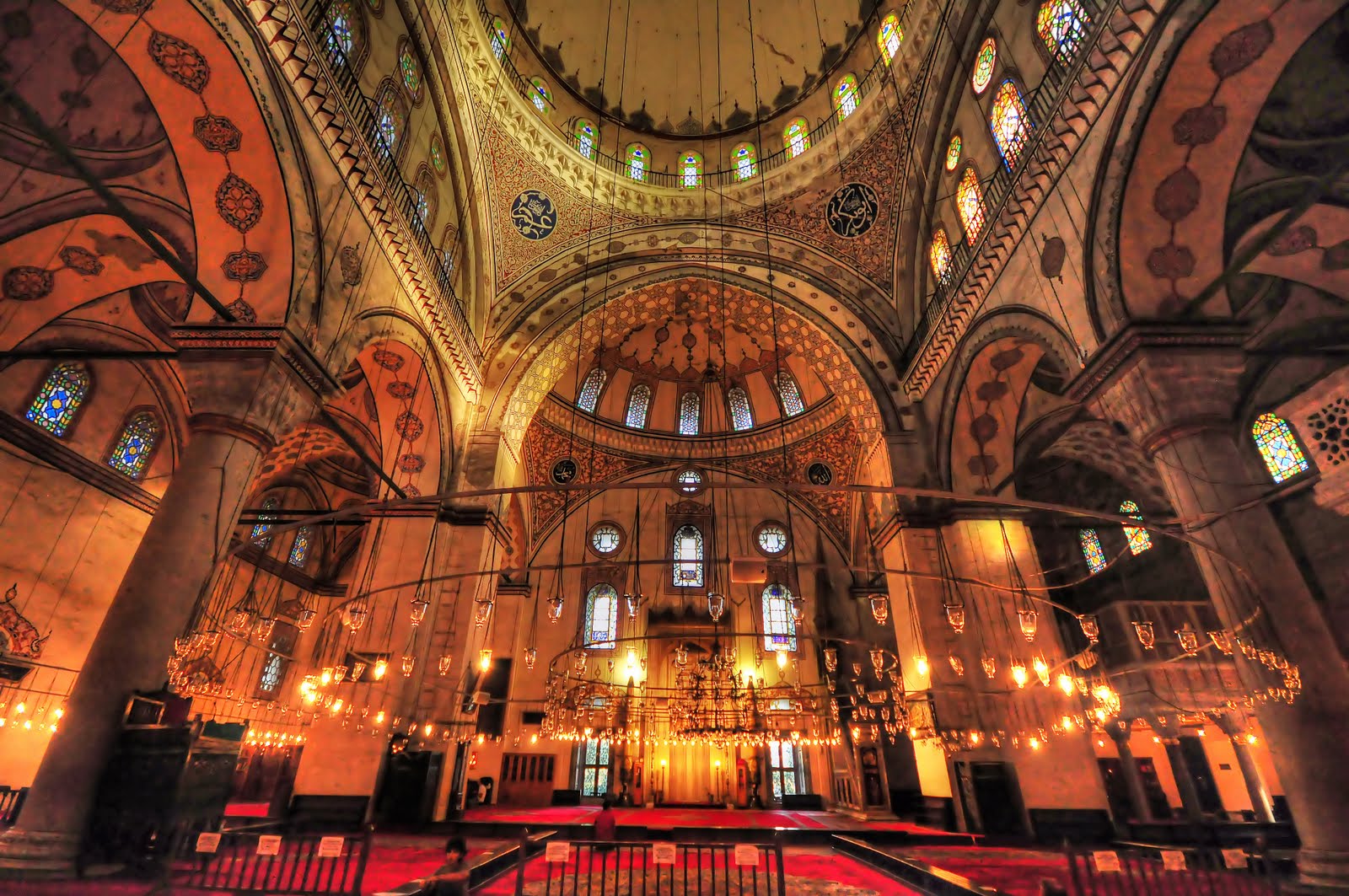 We will quote a conversation between Badiuzzaman Said Nursi, who said, "I will prove that the Quran is a luminous light that does not go out and that cannot be extinguished" by devoting his wife to this cause, and the Devil.
 What is the wisdom behind the severe complaints and intimidation by the Quran against man, who is weak?